
ANATOMY OF A MOON JELLYFISH
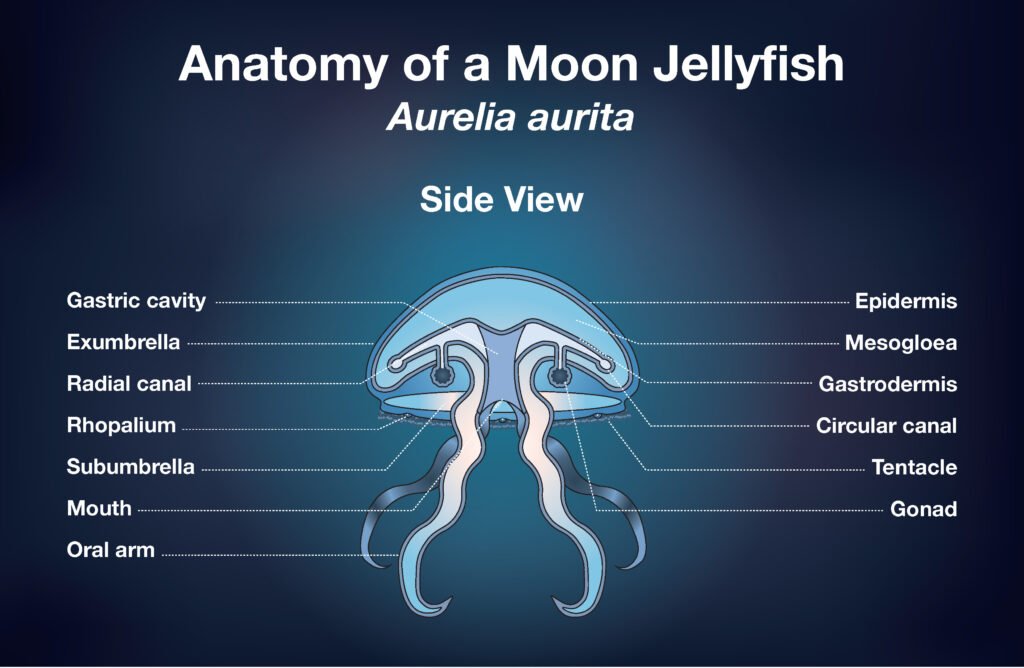
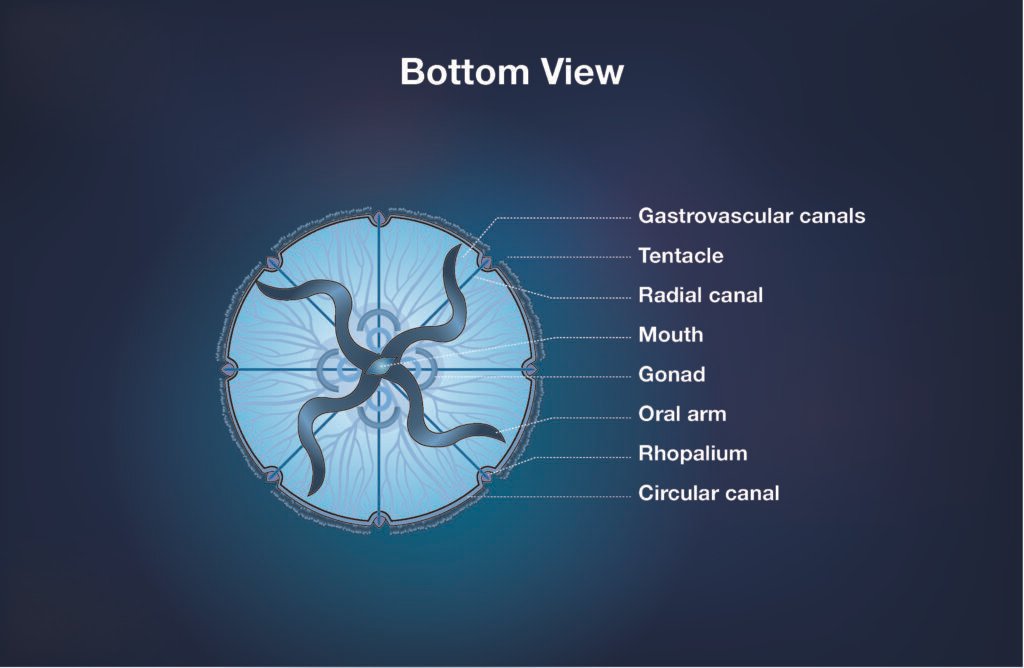
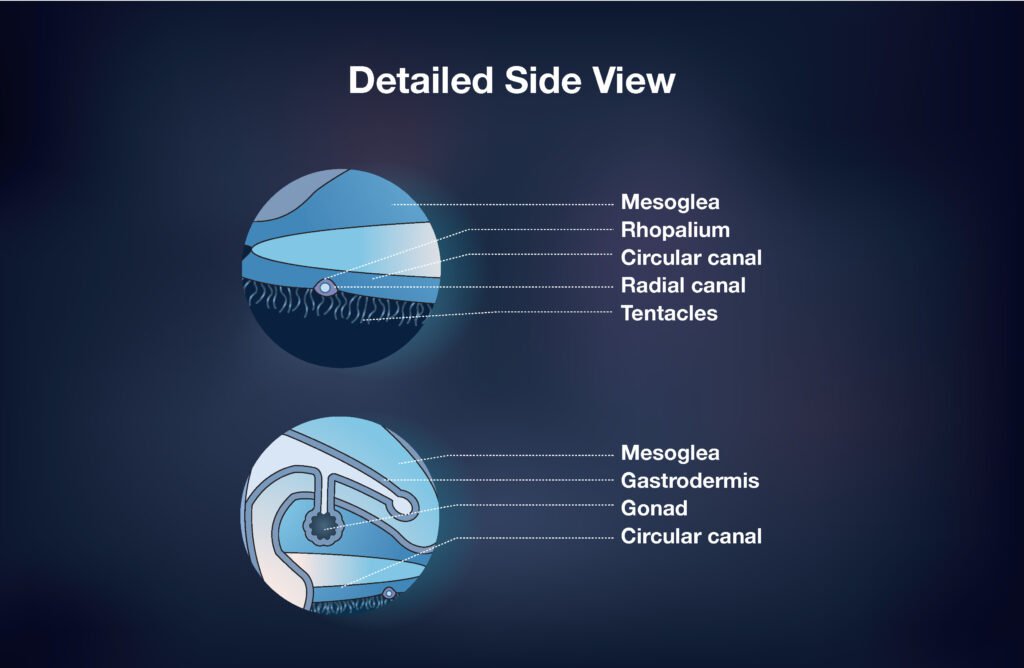
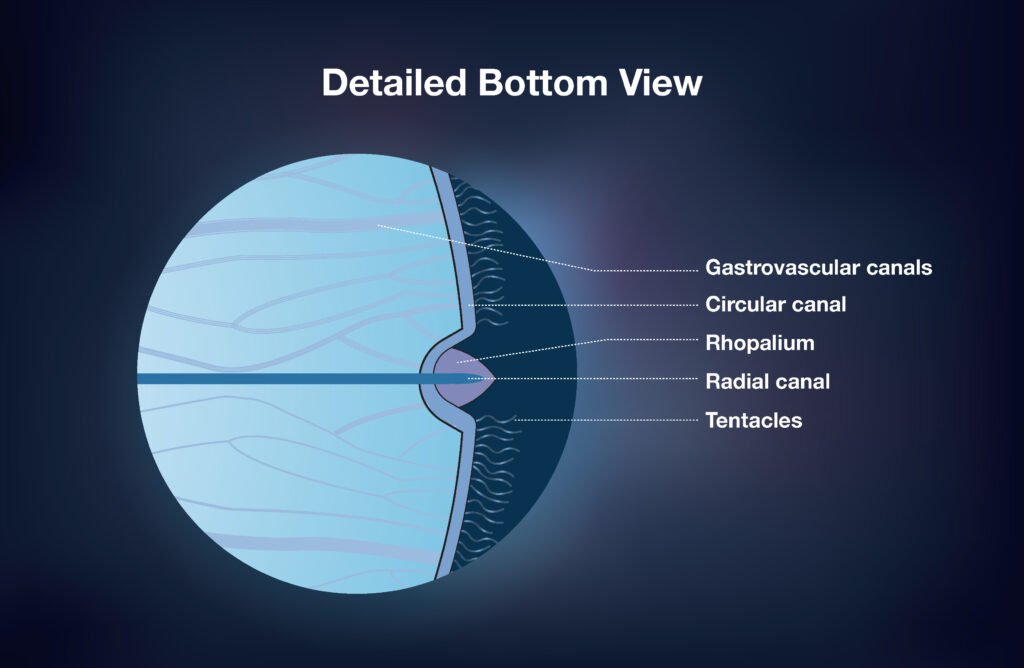
The goal was to create diagrams that someone with no prior knowledge of a jellyfish could easily understand. They needed to be scientifically accurate but also visually engaging. I wanted to make sure the diagrams were not too vague, but also not so overwhelming that they would confuse someone.
The Client
The client is a company that needs demonstratives for a court case related to their patent on Jellyfish derived polymers. The polymer has applications in medical and industrial fields, such as wound dressings and biodegradable materials. In court cases demonstratives are things like diagrams, charts, animations, timelines, and physical models that are used to help a judge and jury understand complex evidence or arguments. They are used to help visually illustrate and explain concepts in a clear way. In order to explain their polymer, they requested diagrams of the anatomy of moon jellyfish (Aurelia aurita) be made.
The Problem
The science behind the jellyfish polymer’s origin is too complex and unfamiliar for a jury to understand t without visuals to assist. The client wanted to be able to show the parts of the moon jellyfish very clearly, and in a way that was visually appealing but also professional.
The Outcome
The outcome was a set of four clear, compelling visuals of the anatomy of the moon jellyfish. The illustrations are scientifically acurate and clearly show the different parts of the animal and the parts are clearly labeled. The illustrations communicate clearly and make it easier for a judge and jury to understand how the anatomy of the jellyfish is critical to the court case.